
“Michael Jordan Just SHATTERED LeBron’s Legacy With One Ruthless Sentence—NBA Fans Are Calling It the Most Savage Humiliation in Basketball History!”
There are moments in sports when a single sentence can split the earth beneath a superstar’s feet. This week, Michael Jordan did exactly that to LeBron James, and the shockwaves are still rattling the NBA world. It wasn’t just shade. It was a full-on demolition of everything LeBron stands for, delivered with surgical precision and the kind of old-school authority that only Michael Jordan can wield.
It started quietly enough—a rare NBC interview, the kind of appearance Jordan almost never makes. For years, he’s been a ghost: popping up for his brand, maybe a business deal, but never for basketball commentary. So when NBC announced Jordan as a special contributor for the return of NBA coverage, fans held their breath. What would the GOAT say about today’s game?
The first segment was classic Jordan: legacy, competition, paying it forward. But then the second segment aired, and everything changed. The topic: load management. The NBA’s dirtiest little secret, the culture of superstars sitting out games for “rest,” even when they’re healthy. And Jordan? He didn’t just disagree—he torched the entire concept.
He looked straight into the camera and, with that icy calm that made defenders tremble, said: “If I’m physically able to play, I play. No excuses. The fans are there to watch me. I want to impress the guy way up in the cheap seats who probably worked his ass off to buy a ticket.”
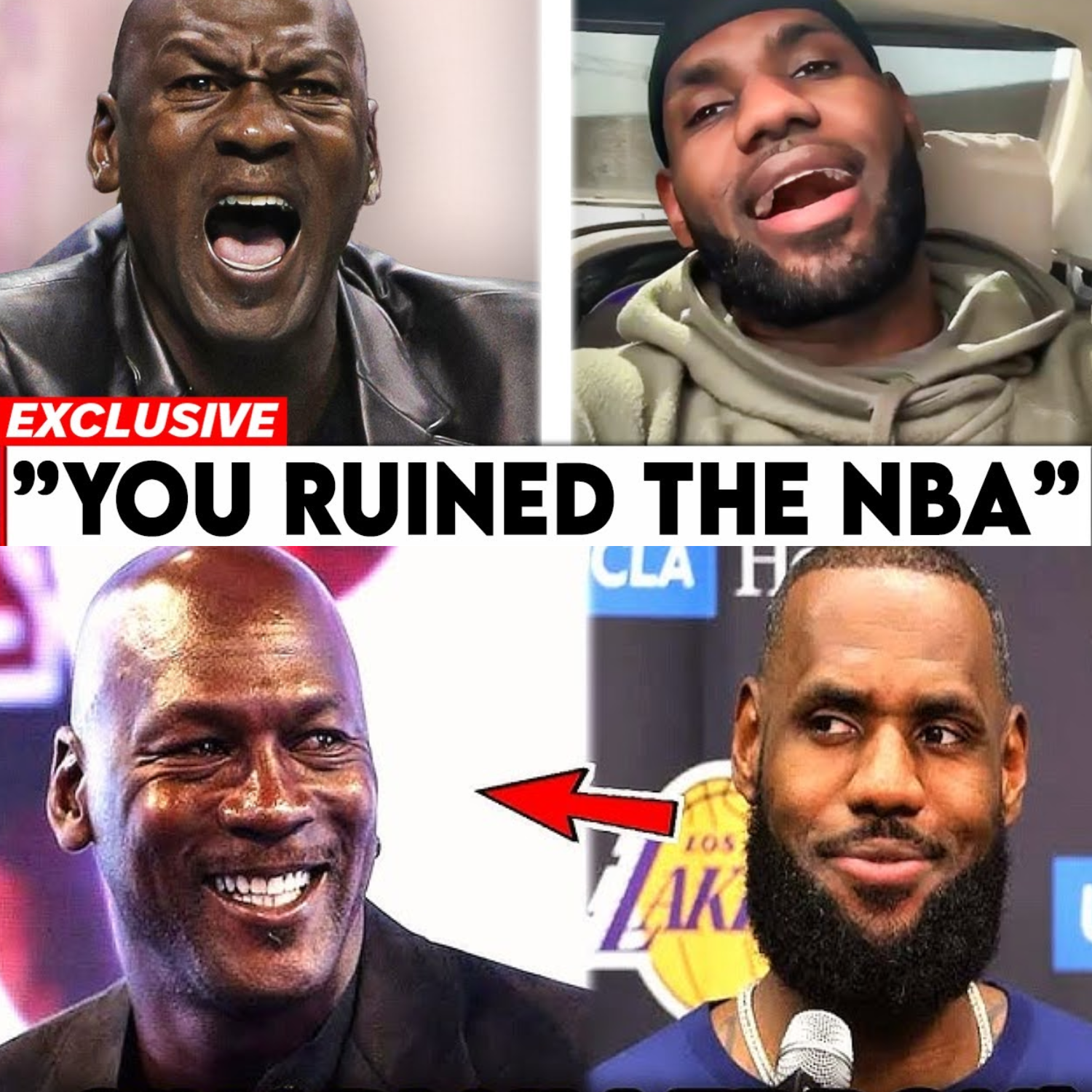
It was more than a statement—it was a direct hit at the heart of the modern NBA. Jordan didn’t name LeBron, didn’t need to. Every fan, every player, every executive knew exactly who he was talking about. The era of load management, of resting stars, of treating basketball like just another business transaction? LeBron built that culture. And Jordan just ripped it apart in front of millions.
Social media exploded instantly. LeBron’s defenders scrambled to point out his longevity, his stats, his historic career. But the numbers don’t lie. Jordan played in 93% of his possible games, including two seasons wrecked by injury. Nine times he played all 82 games. LeBron? Once, in 23 years.
But this isn’t just about numbers. It’s about philosophy. It’s about what basketball means, and who it’s for. Jordan played in an era where toughness was everything—where the Detroit Bad Boys tried to break you every night, where hard fouls weren’t flagrant, they were just basketball. Jordan got beat up, taped his ankle, and played anyway. Remember the Flu Game? 1997 Finals, game five. Jordan was so sick he could barely stand. Most players would have sat. Jordan dropped 38 points and collapsed into Scottie Pippen’s arms. That’s the mentality. That’s the standard.
Contrast that with LeBron’s era. The “King” ushered in a new philosophy: self-preservation, brand management, strategic rest. The Super Team era, the constant team-hopping, the endless recruiting of stars, the culture of “fans don’t matter if I’m tired.” LeBron’s own words after losing in the Finals: “It’s just basketball at the end of the day.” Imagine Jordan saying that. Imagine Kobe Bryant saying that. They never would—because to them, basketball was everything. Losing ate at them. It fueled them. For LeBron, when he wins, rings matter. When he loses, suddenly it’s all just entertainment.
And the hypocrisy runs deep. These players make $40, $50, even $60 million a year—generational wealth. Who pays those salaries? The fans. The regular people who save up for months, take off work, drive hours, and buy tickets for one chance to see their hero play. And then, thirty minutes before tip-off, they hear the superstar is sitting out for “load management.” Not injured. Just resting.
Jordan destroyed that attitude. He talked about the guy in the upper deck, the single mom who saved for her son’s birthday ticket, the diehard fan who might only see him once. He said that person mattered. That playing wasn’t just about himself—it was about honoring the people who made his career possible. “I want to impress that guy way up on top who probably worked his ass off to get a ticket.”
It was a slap in the face to the entire NBA’s current culture. Jordan’s era was about showing up, competing, respecting the game and the fans. LeBron’s era? Rest when you feel like it, downplay competition when you lose, treat basketball like just another business.
And it’s not just the fans who suffer. Load management wrecks team chemistry. How do you build a championship team when your best player is sitting every third game? How do role players develop rhythm when the star is constantly unavailable? Jordan knew that leadership meant showing up. If you’re the superstar, you set the example. If you’re making $50 million, you play. Period.
LeBron’s legacy, for all the stats and accolades, is built on three toxic principles:
-
Winning doesn’t really matter. Celebrate the wins, shrug off the losses.
Loyalty is nonsense. Hop teams, recruit stars, dump teammates when it’s convenient.
Fans don’t matter. Treat them like background noise, not the reason you have a career.
Jordan never would have said, “Fans have to wake up tomorrow and live their same lives.” He respected the fans. He knew they were the reason for his success.
The result? The NBA is in crisis. Ratings are down, engagement is dropping, fans are tired of watching superstars sit out games and act like they’re doing everyone a favor when they actually play. The league is losing its soul.
Can Jordan save the NBA? Maybe not for this generation. The damage is done. But his words are seeds for the future. The young stars—Victor Wembanyama, Cooper Flagg, the next wave—are listening. When Jordan speaks, people pay attention. He’s not talking to LeBron, Kawhi, Harden; he’s talking to the kids who still have a choice.
Imagine if Wembanyama takes Jordan’s message to heart. If he plays every game unless he’s truly injured, if he respects the fans, if he builds his legacy on showing up and competing—not just managing his brand. That would change everything. It would force other young stars to step up, to prove they aren’t soft, to remember that being a professional athlete is a privilege, not a burden.
Of course, there’s a risk. Maybe the current stars ignore Jordan. Maybe they double down on load management, convince themselves they’re smarter than the old generation. If that happens, the NBA slides further away from what made it great. Ratings keep dropping, fans keep leaving, and the league becomes irrelevant.
That’s the crossroads the NBA faces right now. Jordan’s NBC interviews are forcing everyone to choose: Are you with the old-school mentality that built the league into a billion-dollar business, or the new-school approach that’s slowly killing it? The fact that this debate even exists shows how far the league has fallen. Twenty years ago, nobody questioned whether players should show up and play. Now, suggesting that guys making $50 million should play 70 games a year is controversial.
Jordan’s message is brutally simple: If you’re physically able to play, you play. You honor the fans who paid to see you. You respect your teammates. You understand the game is bigger than you. That’s not complicated. That’s just basic professionalism. But in LeBron’s era, even that seems impossible.
So here’s what we know: Michael Jordan went on national television and reminded everyone what greatness actually looks like. He didn’t need to say LeBron’s name—everyone already knew who he was talking about. The culture LeBron built, where sitting out is normal, winning is optional, and fans don’t matter? Jordan just exposed all of it.
This is bigger than one interview. It’s a battle for the soul of basketball. On one side, Jordan’s standard: show up, compete, respect the game and the people who love it. On the other, LeBron’s era: rest when you feel like it, downplay competition, treat basketball like just another business. The current generation may be too far gone, but the next one is still up for grabs. Jordan’s voice in this conversation might be exactly what the league needs—not to save the 2020s, but to save the 2030s. To remind the next wave of superstars that greatness isn’t just about talent. It’s about showing up. It’s about competing. It’s about understanding that when you’re blessed enough to play this game for a living, you owe it to everyone who came before you and everyone watching now to give them your best every single night.
That’s Michael Jordan’s message. That’s the standard he’s defending. And with one sentence, he didn’t just humiliate LeBron—he drew the line in the sand for the future of the entire sport.
News
Prison Bully Tried to Humiliate the Black Janitor—Ended Up Flat on His Back While the Yard Watched in SHOCK
Prison Bully Tried to Humiliate the Black Janitor—Ended Up Flat on His Back While the Yard Watched in SHOCK The…

“Bikers Unleash Hell on Bullies Who Tormented a Deaf Kid—And Milbrook Will Never Forget”
“Bikers Unleash Hell on Bullies Who Tormented a Deaf Kid—And Milbrook Will Never Forget” The small town of Milbrook, Ohio,…
“Retired Kung Fu Master Snaps Prison Kingpin’s Ego in Half—Chaos Never Saw It Coming”
“Retired Kung Fu Master Snaps Prison Kingpin’s Ego in Half—Chaos Never Saw It Coming” The moment Elias Brooks shuffled into…

“She Crossed Every Line for a Death Row Prisoner—What He Asked Will Make You Question Humanity”
“She Crossed Every Line for a Death Row Prisoner—What He Asked Will Make You Question Humanity” The clang of steel…
“MAGA Veteran HUMILIATES Jamie Raskin With a Savage Line That Will Haunt Him Forever—Congress Gets Schooled on Real Military Values”
“MAGA Veteran HUMILIATES Jamie Raskin With a Savage Line That Will Haunt Him Forever—Congress Gets Schooled on Real Military Values”…

“Racist Cops Slap Cuffs on Black Female General—Her Pentagon Call Nuked Their Careers and Shattered the Department”
“Racist Cops Slap Cuffs on Black Female General—Her Pentagon Call Nuked Their Careers and Shattered the Department” She said, “I’m…
End of content
No more pages to load