“SENATOR KENNEDY INCINERATES JAMES COMEY: FBI’S FALLEN STAR REDUCED TO ASHES IN THE MOST BRUTAL SENATE SHOWDOWN OF THE DECADE”
If you thought Senate hearings were just stuffy rituals, think again. Today’s Capitol Hill spectacle was less a hearing and more a demolition derby—one where Senator John Kennedy didn’t just grill former FBI Director James Comey, he flambéed him. The southern senator’s wit was sharper than a gator’s bite, and Comey, once the untouchable G-man, left the chamber looking more like a cautionary tale than a crime-fighter. This was not just politics—it was a master class in public humiliation, and Kennedy was the professor.
The opening bell rang with Kennedy’s drawl cutting through the silence: “Sally Yates says you went rogue. Isn’t that accurate?” Comey bristled, “It is not accurate.” Kennedy didn’t blink. “Well, why would she say that? She sure didn’t compliment you. I was sitting right here bigger than Dallas. Listen to her. She said, ‘You went rogue.’” The audience tensed, sensing the blood in the water. Kennedy was just getting started.
Comey was forced to defend his decision to investigate the Republican nominee for president—a move that, as Kennedy reminded him, came after the Clinton investigation had already wrapped. Kennedy’s voice was incredulous: “You got a FISA warrant that was a lie, and you say, ‘Well, it wasn’t.’ You’re head of the FBI. Didn’t you check? Didn’t you go, ‘Hey guys, this is the nominee for president of the United States. Let’s sit down and talk about what’s your evidence.’ You never did that.” Comey’s attempts at bureaucratic nuance fell flat. Kennedy wasn’t interested in excuses; he wanted accountability.
The senator’s southern charm was a velvet glove over an iron fist. “You have been an equal opportunity egotist. You have tried to screw both Trump and Clinton.” Comey tried to explain his July 2016 press conference, the infamous letter to Congress eleven days before the election, and the reopening of the Clinton investigation. But Kennedy wasn’t buying it. “You gave us transparency, all right. Eleven days before America voted. That’s not transparency. That’s TNT.” The chamber rippled with nervous laughter. Comey admitted, “I knew it could have an impact.” Kennedy leaned back with a grin, “Well, bless your heart. You sure did.”
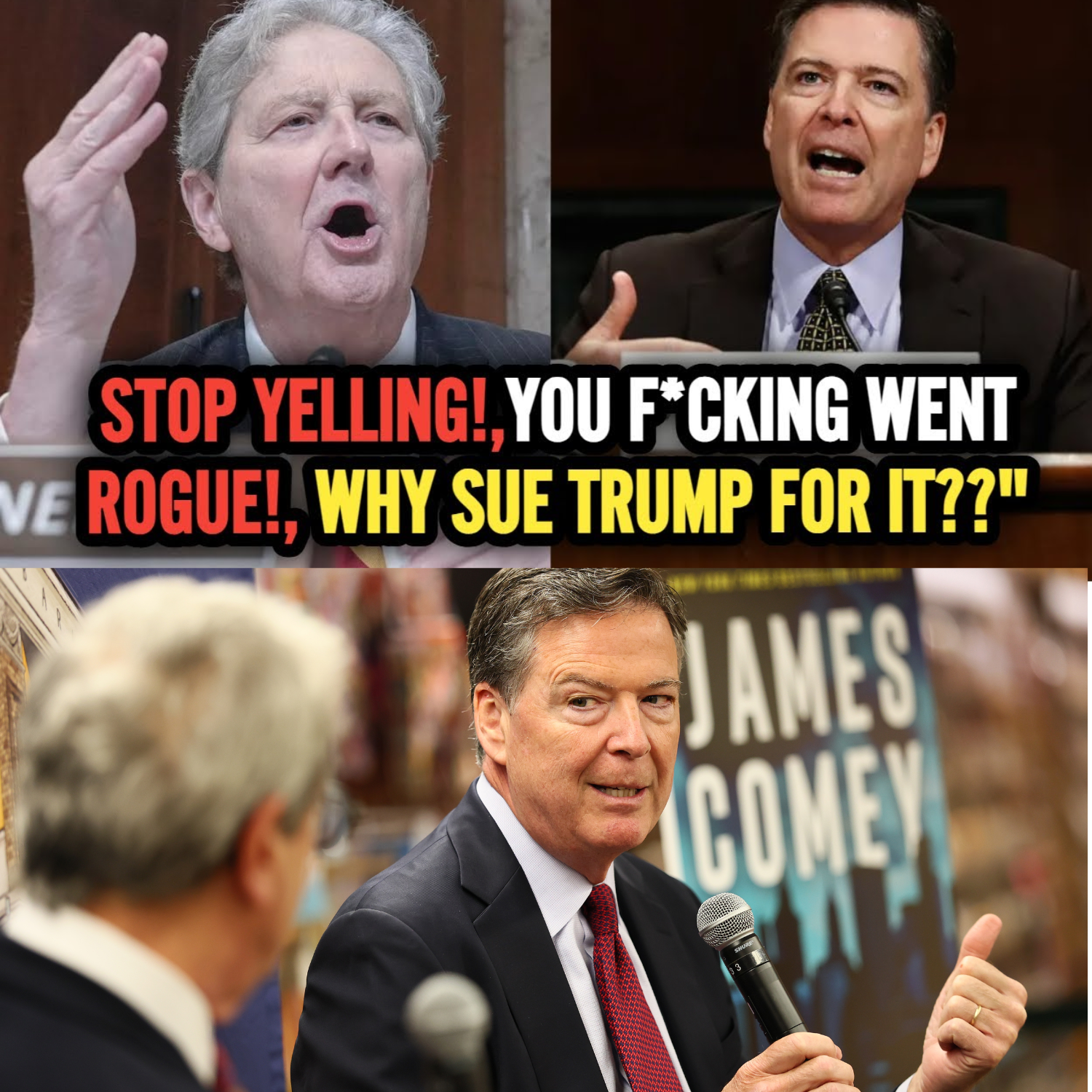
But Kennedy wasn’t done. He pivoted to the Trump investigation, hammering Comey for the Carter Page surveillance. “You weren’t really after Carter Page, were you? You wanted Trump, didn’t you?” Comey stonewalled, “That is not accurate.” Kennedy pressed harder, “You were head of the FBI and you’re investigating the Republican nominee for president. You didn’t think that maybe, just maybe, you should double-check the paperwork?” Comey fumbled through legal jargon. Kennedy shook his head, “You can wiretap a man, but you can’t fact-check your own agency. Lord have mercy.”
The air thickened as Kennedy dropped the Sally Yates bomb again. “Sally Yates said, ‘You went rogue.’ I was sitting right here, bigger than Dallas, and I heard her.” Comey tried to defend his actions, but Kennedy wasn’t letting go. “She sure didn’t say you were employee of the month either.” Comey talked about authority and procedure, but Kennedy rolled his eyes. “You call it authority. The rest of us call it freelancing.” Even Comey had to fight back a grin.
Then came the knockout punch. Kennedy, with all the subtlety of a sledgehammer, mused, “Mr. Comey, if you’d chosen another career, say a driving instructor, don’t you think the FBI would be better off?” The audience gasped. Comey mumbled about teaching at Columbia before joining the bureau. Kennedy didn’t miss a beat. “Well, maybe you should have stayed there, professor. Less drama, fewer wire taps.” At that moment, you knew the score: Kennedy 1, Comey 0.
What made this clash so electric wasn’t just Kennedy’s wit—it was his relentless pursuit of truth. He didn’t just ask questions; he cross-examined souls. Comey’s every attempt at justification was met with a new volley of skepticism. Kennedy’s style was a blend of courtroom prosecutor and stand-up comic, delivering lines that stung and stuck. The hearing was part Senate oversight, part comedy roast, and 100% southern justice.
Kennedy’s performance was a reminder that the Senate isn’t just a rubber stamp for bureaucrats. It’s a place where the powerful can—and should—be held to account. Comey, once the face of American law enforcement, was forced to confront the consequences of his actions in real time. Kennedy’s questions were more than rhetorical; they were indictments of a system that too often lets its stars write their own rules.
As the hearing wore on, Kennedy kept up the pressure. He grilled Comey on the Clinton email investigation, pointing out the unprecedented nature of his press conference and the timing of his letter to Congress. “You held more press conferences than Beyoncé had concerts in 2016,” Kennedy quipped. The room erupted. Comey, usually composed, looked rattled.
Kennedy’s southern wit wasn’t just for show. It was a weapon. When Comey tried to justify his decisions, Kennedy shot back, “You don’t like attention, sir? You sure had a lot of it.” The senator’s ability to blend humor and outrage made for must-watch TV. It was clear Kennedy wasn’t just speaking for himself—he was voicing the frustrations of millions who felt the FBI had gone off the rails.
The hearing reached its crescendo when Kennedy returned to the theme of accountability. “Can we agree that the FBI is the premier law enforcement agency in all of human history?” Comey replied, “I think so. At risk of offending DEA, I think so.” Kennedy didn’t miss a beat. “If you’d chosen a different career, say a driving instructor, and you’d never pursued a career at the FBI, don’t you think the FBI would be better off?” Comey tried to deflect, but Kennedy’s point was clear: leadership matters, and mistakes at the top have consequences.
By the end, Comey was left defending not just his actions, but his legacy. Kennedy’s relentless questioning exposed the cracks in Comey’s story. The former FBI director, once seen as a pillar of integrity, was reduced to a man scrambling for justification. Kennedy’s performance was a tour de force—a reminder that no one is above the law, and no one is immune from scrutiny.
The fallout from the hearing was immediate. Clips of Kennedy’s takedown went viral, with pundits and citizens alike marveling at the senator’s ability to cut through the spin. The message was clear: the days of unchecked power are over. If you step into the Senate, you better be ready to answer for your actions.
Kennedy’s fiery clash with Comey will be remembered as one of the most brutal showdowns in recent memory. It was a moment when the veneer of bureaucratic invincibility was stripped away, revealing the human flaws beneath. Kennedy didn’t just destroy Comey—he destroyed the myth that the powerful are untouchable.
In the end, the hearing was more than political theater. It was a reckoning. Kennedy’s questions forced Comey to confront the reality that transparency isn’t just a buzzword—it’s a responsibility. The senator’s southern charm masked a razor-sharp intellect, and his performance was a master class in accountability.
If you missed today’s hearing, you missed history. Senator Kennedy didn’t just question James Comey—he incinerated him. The FBI’s fallen star was reduced to ashes, and the rest of Washington took note. In a town where power is currency, Kennedy proved that truth is still the most valuable commodity of all.
So next time you hear someone say Senate hearings are boring, point them to Kennedy vs. Comey. It wasn’t just a clash—it was a conflagration. And when the smoke cleared, only one man was left standing.
News
Prison Bully Tried to Humiliate the Black Janitor—Ended Up Flat on His Back While the Yard Watched in SHOCK
Prison Bully Tried to Humiliate the Black Janitor—Ended Up Flat on His Back While the Yard Watched in SHOCK The…

“Bikers Unleash Hell on Bullies Who Tormented a Deaf Kid—And Milbrook Will Never Forget”
“Bikers Unleash Hell on Bullies Who Tormented a Deaf Kid—And Milbrook Will Never Forget” The small town of Milbrook, Ohio,…
“Retired Kung Fu Master Snaps Prison Kingpin’s Ego in Half—Chaos Never Saw It Coming”
“Retired Kung Fu Master Snaps Prison Kingpin’s Ego in Half—Chaos Never Saw It Coming” The moment Elias Brooks shuffled into…
“She Crossed Every Line for a Death Row Prisoner—What He Asked Will Make You Question Humanity”
“She Crossed Every Line for a Death Row Prisoner—What He Asked Will Make You Question Humanity” The clang of steel…
“MAGA Veteran HUMILIATES Jamie Raskin With a Savage Line That Will Haunt Him Forever—Congress Gets Schooled on Real Military Values”
“MAGA Veteran HUMILIATES Jamie Raskin With a Savage Line That Will Haunt Him Forever—Congress Gets Schooled on Real Military Values”…
“Racist Cops Slap Cuffs on Black Female General—Her Pentagon Call Nuked Their Careers and Shattered the Department”
“Racist Cops Slap Cuffs on Black Female General—Her Pentagon Call Nuked Their Careers and Shattered the Department” She said, “I’m…
End of content
No more pages to load