
“Kennedy UNLEASHES Fury: Maduro Branded a Blood-Soaked Terrorist—Venezuela’s Dictator Begs Russia, China, and Iran for Help as Trump Targets Narco Killers!”
In a world gripped by chaos and corruption, few figures stand out as brazenly villainous as Nicolás Maduro, the embattled President of Venezuela. This week, Republican Senator John Kennedy of Louisiana, never one to mince words, detonated a rhetorical bomb on national television, branding Maduro a “terrorist himself”—a man with “blood stains under his fingernails” who rules not by popular support but by terror, drugs, and fear. Kennedy’s explosive remarks, delivered on Fox’s “The Story,” have sent shockwaves through diplomatic circles, exposing the grim reality of a regime that has become a nexus for narco-terrorism, international intrigue, and a growing threat to American lives.
Senator Kennedy, a stalwart member of the Judiciary Committee, began the interview with a simple premise: the fight against narco-terrorists is not just a foreign policy issue—it’s a matter of life and death for American families. “The people being killed are terrorists. We call them ‘narotists’ because they’re killing our children with drugs,” Kennedy declared, drawing a direct line between the cartels flooding America with fentanyl and the jihadists sowing chaos in Africa and the Middle East. “They’re just as much terrorists as the jihadis in the Sahel, in Mali, in Mozambique, in Pakistan, in Afghanistan. In fact, the narco-terrorists in our hemisphere are even more dangerous in the sense that they’re killing more Americans.”
Kennedy’s words struck a nerve, cutting through the usual political noise with brutal clarity. For years, critics have accused the Venezuelan government of enabling drug traffickers, but Kennedy went further, painting Maduro himself as the mastermind behind a cartel of killers. “Maduro is a terrorist himself,” he said. “He has a cartel full of narco-terrorists of his own, and he’s scared. And I’m glad he’s scared.”
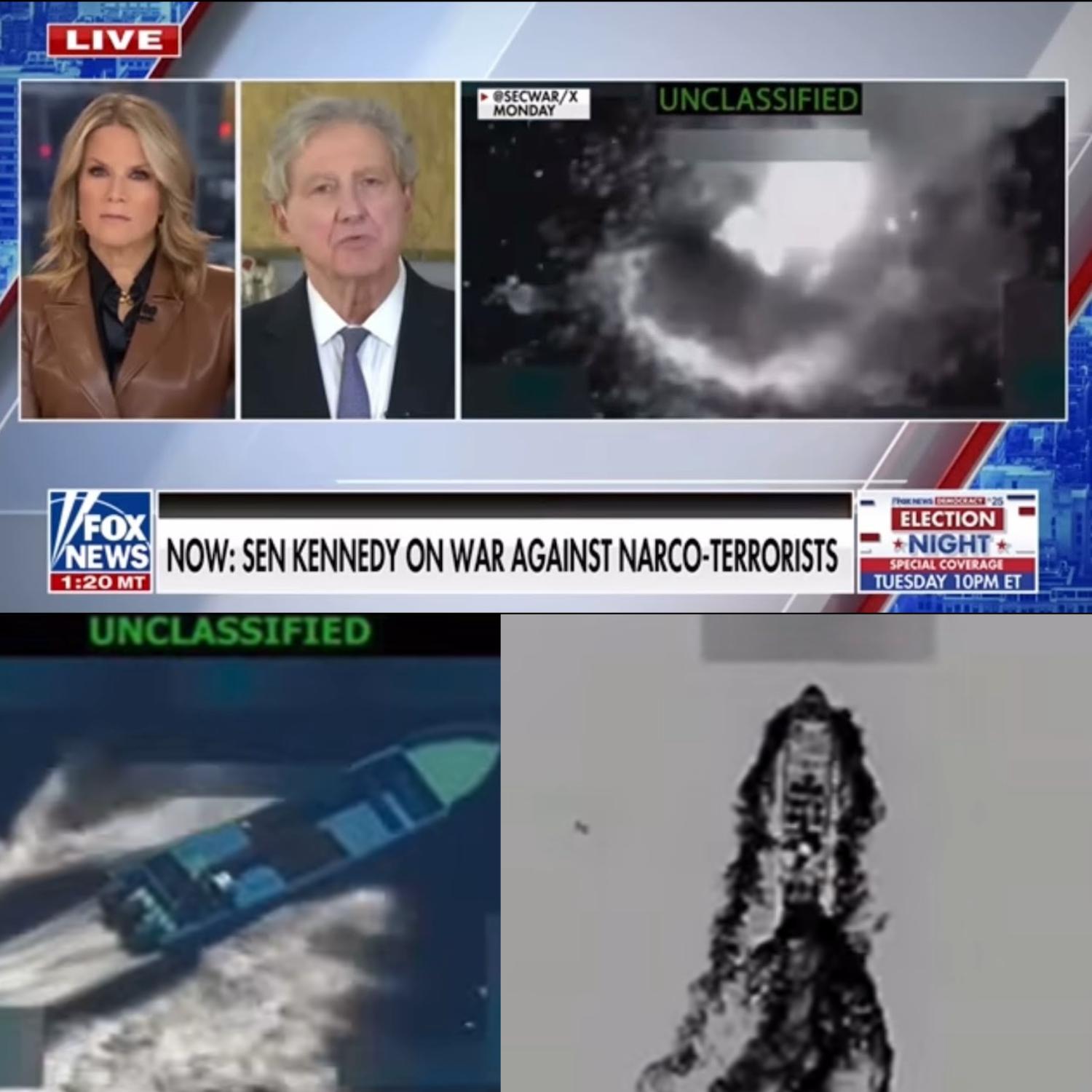
The senator’s comments came amid revelations from the Washington Post that Maduro, desperate to shore up his crumbling regime, had sent a letter to Russian President Vladimir Putin begging for defensive radar, military aircraft repairs, and possibly even missiles. According to U.S. government documents, Venezuela is also reaching out to China and Iran, seeking military assistance and equipment to strengthen its defenses. “He’s supported right now by Cuba. I’m sure he’s talking to America’s enemies—China, for example, Russia,” Kennedy said, warning that Maduro’s alliances are a clear signal of his intent to escalate the conflict.
The timing of Kennedy’s outburst could not have been more critical. With President Trump ramping up efforts to target narco-terrorists in the region, and bipartisan calls for greater transparency about the administration’s actions, Kennedy positioned himself as both a defender of tough tactics and an advocate for openness. He praised Trump for “doing something about it” and called for Secretary of State Rubio to brief every member of the Senate—Republican and Democrat alike—on the legality and necessity of the strikes against narco-terrorist leaders.
But Kennedy’s message was also laced with skepticism about his Democratic colleagues, accusing some of them of acting in bad faith and opposing Trump’s actions regardless of the evidence. “Some of my Democratic colleagues are not in good faith. It doesn’t matter what they’re briefed on. They’re going to oppose the president on this,” Kennedy said, hinting at the deep partisan divide that has plagued America’s response to the crisis.
As the interview continued, Kennedy’s language grew even more incendiary. He likened Maduro and his cronies to Jack Nicholson’s deranged character in “The Shining”—“crazy and they want to kill Americans.” The senator’s blunt assessment left no room for diplomatic niceties: “I appreciate the fact that Trump is killing them first.”
This is not the first time Kennedy has courted controversy with his unapologetic rhetoric. Known for his folksy delivery and razor-sharp wit, the Louisiana senator has made a career out of calling it as he sees it. But his attack on Maduro represents a new level of political toxicity, framing the Venezuelan leader as a direct threat to U.S. national security—a man whose desperation has driven him into the arms of America’s most dangerous adversaries.
The implications of Kennedy’s remarks are profound. By labeling Maduro a terrorist, the senator is not just making a moral judgment—he’s setting the stage for a potential escalation in U.S. policy. If Maduro is treated as a terrorist, rather than a corrupt politician or failed dictator, the options for American intervention expand dramatically. Sanctions, covert operations, even military strikes could be justified under the banner of counter-terrorism, rather than traditional diplomacy.
Meanwhile, Maduro’s frantic appeals to Russia, China, and Iran reveal the depth of his isolation. With the Venezuelan economy in freefall, his grip on power slipping, and his own allies growing restless, the dictator is turning to the world’s worst actors for salvation. The prospect of Russian missiles in Venezuela, Chinese military hardware on the ground, and Iranian advisors in Caracas should send chills down the spine of every American policymaker.
For Kennedy, the stakes could not be higher. “He’s not there by popular support,” the senator said. “He has blood stains under his fingernails.” The message is clear: Maduro is not just a failed leader—he is a murderer, a criminal, and a terrorist. And the time for half-measures is over.
Yet amid the fury and the fire, Kennedy also called for transparency. He urged the administration to release as much information as possible, without compromising classified sources, to give the American people a better understanding of what is happening—and why. “Go out in front of the public and explain to the press as much as he could without giving classified information what he just told us and take questions. And I think the American people then will support what the president’s doing,” Kennedy argued, insisting that sunlight is the best disinfectant.
The reaction from Washington has been predictably polarized. Some Democrats have demanded more oversight, warning that unchecked executive power could lead to abuses. Others, including Kennedy, have dismissed these concerns as political grandstanding, arguing that the threat posed by narco-terrorists and their state sponsors is too grave to wait for consensus.
Outside the Beltway, Kennedy’s words have struck a chord with ordinary Americans fed up with the endless stream of drugs pouring across the southern border. The senator’s framing of the crisis as a war against terrorists, rather than just criminals, taps into a deep vein of anger and frustration—one that has fueled Trump’s rise and continues to shape the national debate.
As the interview wrapped up, Kennedy’s final words echoed with a chilling warning: “These people are like Jack Nicholson in The Shining. They’re crazy and they want to kill Americans.” It was a moment of unvarnished truth, a glimpse into the mind of a senator who believes the stakes are existential—and who will not back down in the face of evil.
In the days to come, Kennedy’s toxic tirade will be dissected, debated, and denounced by pundits and politicians alike. But one thing is certain: the senator has changed the conversation. Maduro is no longer just a dictator—he is a terrorist, a killer, and a threat to every American family. The battle lines have been drawn, and the fight is just beginning.
As Venezuela spirals deeper into chaos, and Maduro clings to power with the help of foreign despots, Kennedy’s warning rings louder than ever. The world is watching, and America must decide: Will we confront the blood-soaked tyrant in Caracas, or will we allow the narco-terrorists to keep killing our children? For Kennedy, the answer is clear—and the time for action is now.
News
Prison Bully Tried to Humiliate the Black Janitor—Ended Up Flat on His Back While the Yard Watched in SHOCK
Prison Bully Tried to Humiliate the Black Janitor—Ended Up Flat on His Back While the Yard Watched in SHOCK The…

“Bikers Unleash Hell on Bullies Who Tormented a Deaf Kid—And Milbrook Will Never Forget”
“Bikers Unleash Hell on Bullies Who Tormented a Deaf Kid—And Milbrook Will Never Forget” The small town of Milbrook, Ohio,…
“Retired Kung Fu Master Snaps Prison Kingpin’s Ego in Half—Chaos Never Saw It Coming”
“Retired Kung Fu Master Snaps Prison Kingpin’s Ego in Half—Chaos Never Saw It Coming” The moment Elias Brooks shuffled into…
“She Crossed Every Line for a Death Row Prisoner—What He Asked Will Make You Question Humanity”
“She Crossed Every Line for a Death Row Prisoner—What He Asked Will Make You Question Humanity” The clang of steel…
“MAGA Veteran HUMILIATES Jamie Raskin With a Savage Line That Will Haunt Him Forever—Congress Gets Schooled on Real Military Values”
“MAGA Veteran HUMILIATES Jamie Raskin With a Savage Line That Will Haunt Him Forever—Congress Gets Schooled on Real Military Values”…
“Racist Cops Slap Cuffs on Black Female General—Her Pentagon Call Nuked Their Careers and Shattered the Department”
“Racist Cops Slap Cuffs on Black Female General—Her Pentagon Call Nuked Their Careers and Shattered the Department” She said, “I’m…
End of content
No more pages to load